


Overview
- Period Poverty is more than just a lack of period-essential products.
- Period poverty is a major reason girls miss school and workdays.
- Silence around periods carries health risks like infections and conditions that go undiagnosed for years.
- Period Poverty is tied to five UN Sustainable Development Goals, all at once.
- Boys need to be educated about menstrual health so the stigma does not get carried on.
- Girl Power USA’s Period Power Program shows what real, community- based solutions to period poverty can look like.
Introduction
A fourteen-year-old girl in rural Kenya wakes up on the first day of her period with no pad, only a strip of old fabric that will not last the whole day. She decides to stay home instead. Nobody notices her absence because this happens every month in millions of homes across the world. There are no big headlines or consideration for this kind of loss. But over the years, one missed day adds up to missed lessons, exams, and entire academic years.
Period poverty looks small until you follow the entire journey from how it starts to where it leads. It is not just a hygiene issue but a barrier to global development. When holistically mapped, the journey leads straight to the UN Sustainable Development Goals, and without addressing menstrual health, several of those goals stay permanently out of reach.
What Period Poverty Really Means
Period poverty is, in simple terms, the lack of access to pads and tampons, unsafe sanitation facilities, poor menstrual health education, and the stigma that keeps girls from asking for help in the first place. The issue is not confined to one country or income bracket, even though people often assume otherwise. It shows up wherever access breaks down and is ignored owing to systematic challenges and societal perceptions. A girl in an under-resourced school in the United States can face nearly the same barrier as a girl in a village in Uganda, even though their circumstances look nothing alike on paper. The problem adapts to whatever gaps already exist in a community and settles right into them. Moreover, period poverty does not work in isolation but rather intersects with nearly every major measure of development the world tracks today.
How Missing School Becomes Missing Futures
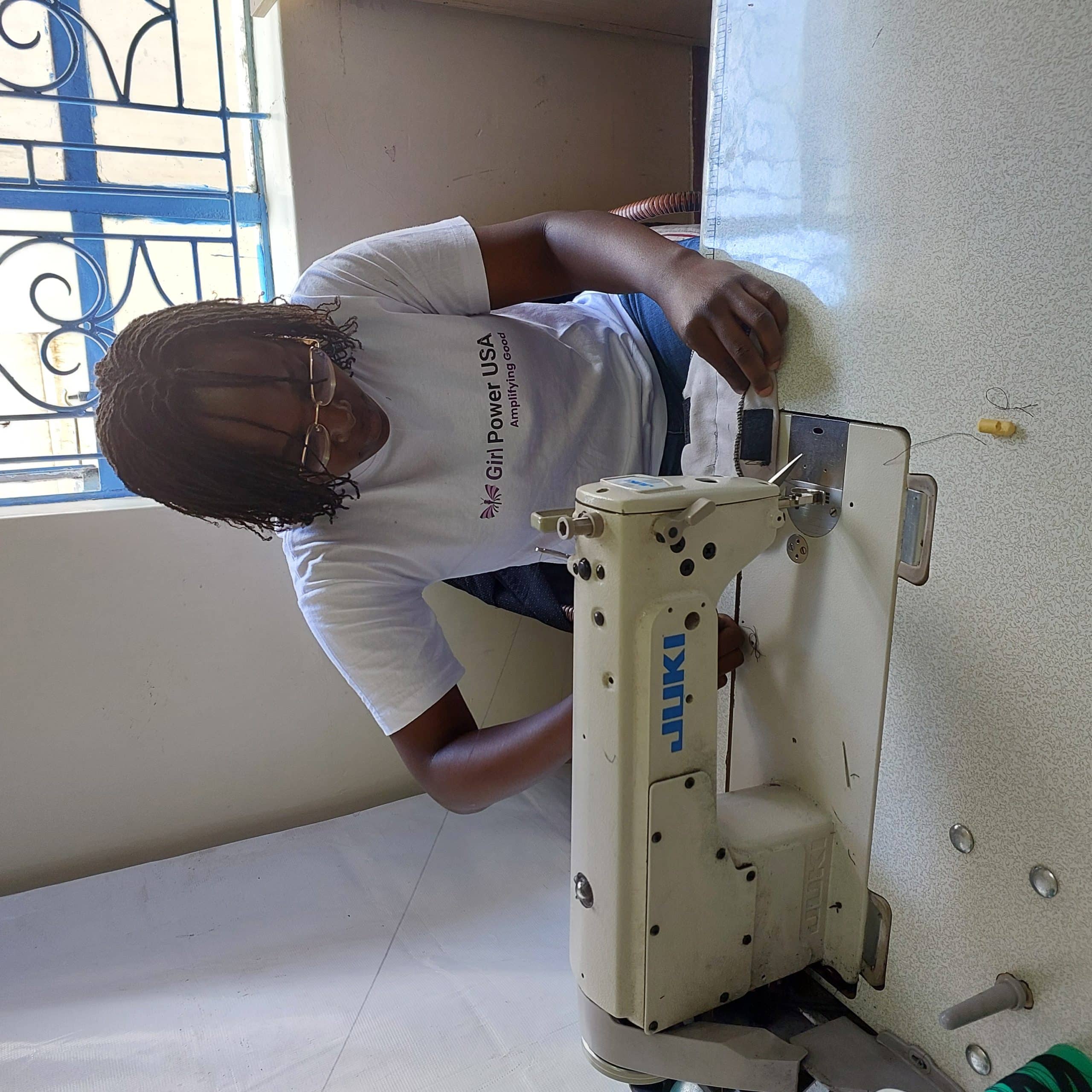
Girls miss school due to several period poverty-related reasons: lack of products to manage their periods safely, schools lacking a private bathroom or running water, societal stigma, or cramps severe enough that sitting through a full day of classes is not realistic. One missed day rarely feels like a crisis, but according to UNESCO, period poverty and poor sanitation cause millions of girls in Sub-Saharan Africa to miss up to 20% of school days a year, and for some girls the absences pile up until dropping out feels like the only option left.
Dropping out does not have to be the end of the story. Girls do not need a complicated fix to stay in school through their periods. They need the basics—pads or other menstrual care products, bathrooms with doors that lock and water that runs, and teachers who do not treat a period as an excuse. They also need to be educated about periods before their first one arrives, so they learn what is happening to their own body instead of learning it out of fear. None of this asks for much. It just takes access and people willing to treat periods as ordinary instead of something to hide.
Solving period poverty should not rest on girls alone. Boys must carry a part of this responsibility too, even though it rarely gets framed that way. They should be educated properly about menstrual health and care because they grow up in the same classrooms and households where menstruation is treated as something shameful or unspeakable. A teenage boy who understands menstruation as a normal biological process, rather than something to joke about or avoid, grows into a man who does not reinforce the stigma his mother or sister had to navigate. Educating both girls and boys together at an early age is how we can truly break the cycle.
The Health Risks Behind the Silence
Silence carries the consequences that go beyond just lack of resources. When girls are not taught basic reproductive health, they often do not recognize symptoms that need medical attention, and shame keeps many from speaking up even when things feel wrong. Silence, coupled with lack of knowledge, pushes girls toward unsafe practices such as reusing unclean material or whatever material is on hand, regardless of safety. These unsafe practices lead to infections and complications tied directly to inadequate menstrual hygiene. Beyond direct risks associated with lack of menstrual care products, the taboo reaches even further. Girls living with diseases such as polycystic ovary syndrome (PCOS) or endometriosis face the small wall of silence, often going undiagnosed for years. All of this is preventable when the right education and resources are in place. This is why menstrual health has to be treated as a health issue in its own right and not merely just as a matter of supplies.
A Clear Marker of Gender Inequality
Period poverty is one of the clearest markers of gender inequality because there is no equivalent burden placed on boys—no monthly cost, and no disruption to school or work. It shows up in real, physical terms in how girls’ and women’s needs often get pushed aside in ways boys’ needs never are, and that pattern follows them well past childhood. The best step towards closing that gap is by treating menstruation as something ordinary to talk and learn about, instead of hiding it the way most communities still do.
The barriers don’t even stop once childhood ends. Women miss workdays, lose wages, or get passed over for opportunities just like how girls miss school in the first place. The lost income rarely stays contained to one person, as it often supports children and extended family as well, and that loss ripples outward into the wider community around her.
This goes beyond missed paychecks or individual barriers. Menstrual health barely gets any research funding, and most welfare systems offer nothing for something nearly half the world deals with. Those gaps say a lot about a world built around men, where women’s needs are treated as extra rather than normal.
Rural communities, low-income families, and places without much infrastructure tend to absorb the worst of this. The reason is not that the underlying problem looks different there, but because these communities have the least cushion to fall back on. Period poverty doesn’t simply sit on top of inequality that was already there. It deepens it, and it makes it that much harder for communities already struggling to catch up.
One Root Cause, Five Goals
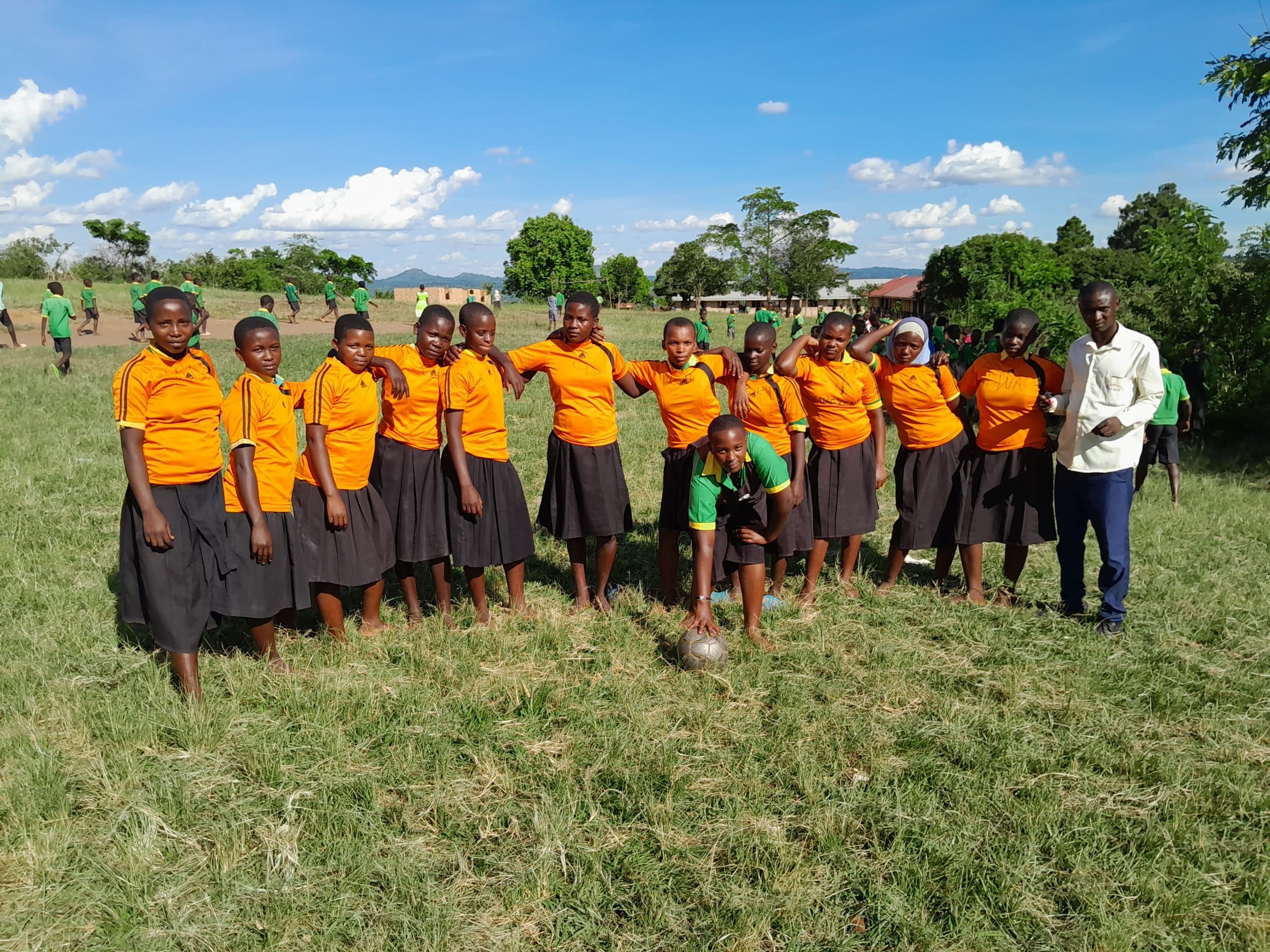
The sustainable goals of education, health, gender equality, decent work, and reduced inequalities usually get treated as five separate goals with five separate solutions. But menstrual health runs through all of them at once, which is a big part of why leaving it unaddressed slows down progress in the rest.
- Good Health and Well-Being are affected every time poor hygiene leads to infection or a girl grows up without basic reproductive health knowledge.
- Quality Education is affected every time a girl misses class or leaves school altogether because she has no safe way to manage her period.
- Gender Equality stays out of reach while one half of the population deals with a monthly biological process that becomes a burden the other half never has to think about.
- Decent Work and Economic Growth gets affected years later when the same barriers that pulled a girl out of school pull a woman out of steady and equal income further down the line.
- Reduced Inequalities ends up carrying the weight of all four, since it is usually the communities with the least access to resources that get hit hardest by period poverty in the first place.
These goals do not move forward on their own, and they do not move forward in isolation from each other either. A girl who can safely manage her period is more likely to stay in school and improve her chances at steady work later on, which in turn strengthens her household’s income and chips away at the same inequality her community has been dealing with for years. If the access is taken away at the start, then every step after it gets harder to reach. This is why menstrual health belongs at the center of SDG-focused funding rather than off to the side of it. Supporting it means addressing the one point where all five actually meet.
Girl Power USA’s “Period Power Program”
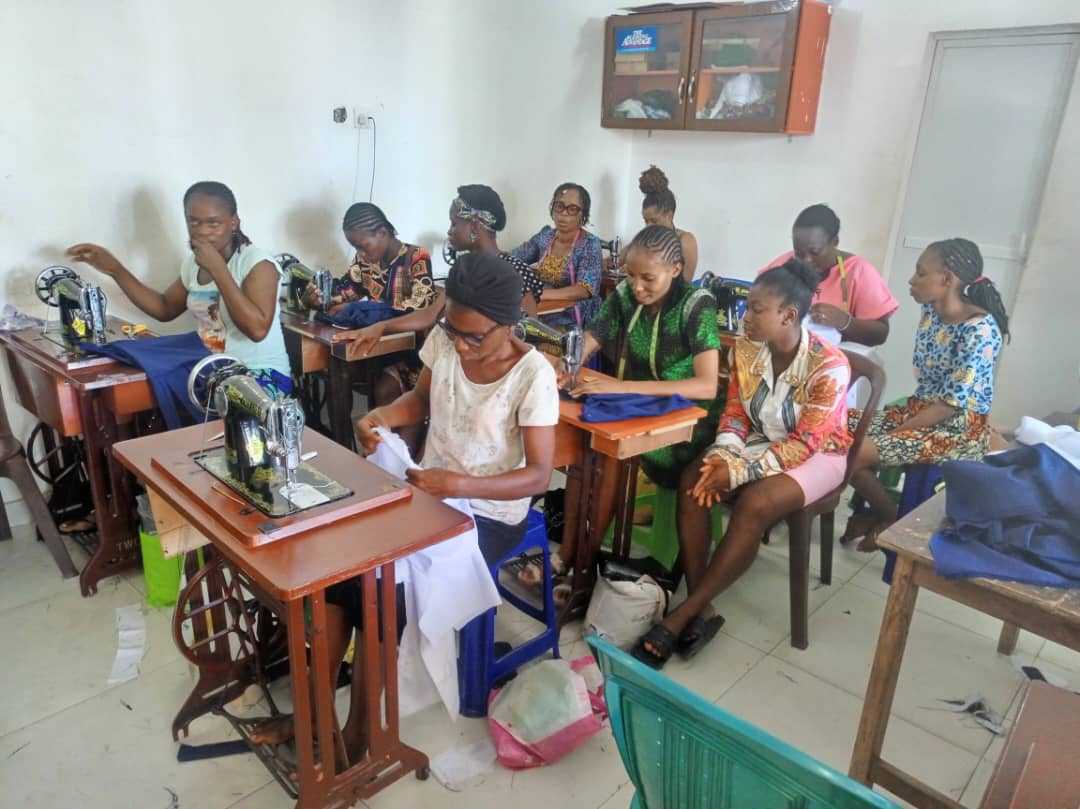
Sustainable solutions to period poverty require more than simply distributing sanitary products. They require building skills and local capacity. Girl Power USA’s Period Power Program addresses this challenge by improving access to affordable and reusable sanitary products while equipping girls and women with practical skills to produce reusable sanitary kits within their communities.
The program combines menstrual hygiene education with hands-on training in reusable pad production. Girl Power USA has distributed nearly a thousand sanitary pads during educational events focused on menstrual hygiene. Beyond immediate access to sanitary products, the program focuses on building practical skills that support self-reliance and create income-generating opportunities for local women to produce and sell sanitary pads within their communities.
The initiative also engages local volunteers and medical trainees to raise awareness and train others, helping strengthen knowledge and skills within the community. Alongside the practical training, sexual and reproductive health education sessions are delivered in person or online and are offered to both girls and boys so the stigma around menstruation does not simply pass to the next generation unchallenged.
By strengthening community participation, the program creates a more sustainable approach to menstrual health. Through this combination of menstrual health education, access to sanitary products, and skills development, Girl Power USA’s Period Power Program works to address period poverty while supporting greater self-reliance and economic opportunities for women and girls in marginalized communities.
Conclusion:
Period poverty is not going to fix itself through silence or segmented support. When menstrual health is treated as a foundational base, then progress on education, gender equality, health, and economic opportunity all become more achievable at once. Supporting a program like Period Power is not a narrow act of charity. It is an investment in moving one of the barriers that has been holding several others in place, and for changemakers and donors looking for where their support can do the most good, that kind of leverage is worth paying attention to.
FAQs
1. What is period poverty?
Period poverty is the lack of access to pads, or other menstrual products, along with poor sanitation, limited menstrual health education, and the stigma that keeps girls and women from asking for help.
2. How does period poverty affect a girl’s education?
Girls miss school when they lack safe products, private bathrooms, or face severe period pain, and shame often keeps them from asking for help. Over time, these missed days can add up and even lead some girls to drop
3. Why is period poverty connected to the UN Sustainable Development Goals?
Period poverty touches five goals at once: good health, quality education, gender equality, decent work, and reduced inequalities. Addressing it can create progress across all five rather than tackling each one separately.
4. What is Girl Power USA doing to address period poverty?
Through its Period Power Program, Girl Power USA provides reusable sanitary products, trains girls and women to make and sell their own kits, and delivers menstrual health education to both girls and boys.
