


- Violence against women remains widespread globally, while frameworks like CEDAW define the issue but lack strong enforcement.
- Gaps in definitions, implementation, and political will lead to inconsistent protections and continued impunity across countries.
- A new optional protocol is needed to create binding standards, mandate criminalization of key offenses, and strengthen accountability mechanisms.
- While it will not end violence entirely, such a framework would close critical gaps and push governments toward consistent global action.
Introduction
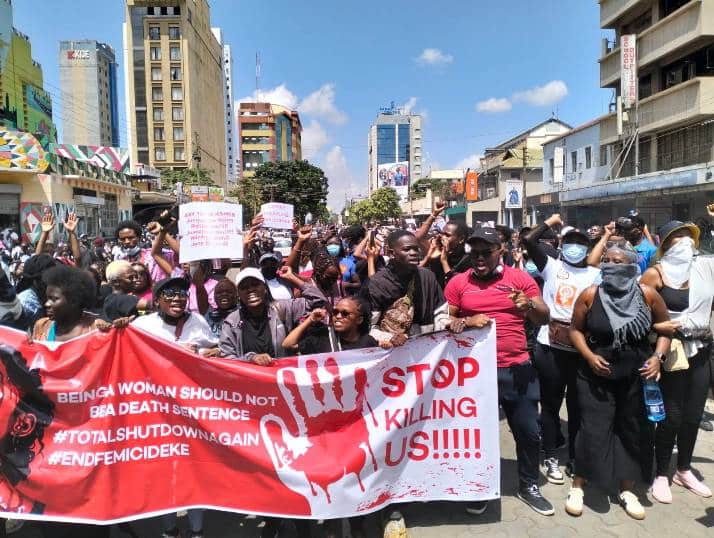
Consider this statistic: more than 130 women are killed every day. No, this isn’t data taken from a warzone, but the number of women killed by a partner or family member. In 2022, a record of 89,000 women were intentionally killed worldwide, the highest figure we’ve seen in the last two decades. And yet, somehow, the international community still doesn’t have a binding legal instrument that specifically names, defines, and prohibits violence against women in all its forms.
This isn’t a new problem. The OHCHR’s 1993 Declaration on the Elimination of Violence Against Women defined the issue as any act of gender-based violence likely to cause physical, sexual, or psychological harm to women. It even linked that violence directly to discrimination, the same one that CEDAW has been trying to dismantle since 1979. What the Declaration and CEDAW alone couldn’t do is make states legally accountable. That gap between naming a problem and actually obligating governments to fix it is where millions of women fall through.
A dedicated optional protocol to CEDAW, hence, becomes the most direct path to closing it. Not because legal instruments are magic, but because without one, enforcement remains voluntary, definitions stay contested, and impunity becomes the rule rather than the exception. This article hopes to make its case by mapping where current frameworks fail while arguing for the specific design choices that would make a new protocol worth having.
Understanding How We Got Here
CEDAW (Convention on the Elimination of All Forms of Discrimination against Women), adopted in 1979 and now ratified by 189 states, is the closest thing international law has to a bill of rights for women. It covers education, employment, political participation, and health. But rape is only mentioned twice in the entirety of its text. The convention was built around the concept of discrimination instead of harm. Those two things, while deeply connected, aren’t the same.
The 1993 Declaration on the Elimination of Violence against Women tried to fill that gap, and it was a good step forward. It named domestic violence, sexual abuse and coercive practices as violations of human rights and not just private misfortune. It established that states have a “due diligence” obligation to prevent and respond to violence, even when it happens behind closed doors. But because it was a declaration and not a treaty, it created no enforcement mechanism. States could praise it in Geneva, but practically ignore it at home.
Some regional treaties have done better. For instance, the Belém do Pará Convention in Latin America, the Maputo Protocol across much of Africa, and Europe’s Istanbul Convention. These were all created with binding obligations and monitoring mechanisms. However, critically, they cover only about a quarter of the world’s women. The 76% left out are concentrated in Asia and the global south, exactly the regions where states aren’t pushing for a new protocol to be adopted. This was never a coincidence.
Where Gaps Remain
The honest answer to why we still need new legal architecture in 2026 is that the existing frameworks have failed on three fronts. These include definition, implementation and accountability, where each one correlates with the others.
On definitions, marital rape remains legal or poorly criminalized in dozens of countries. Digital violence, such as deepfake pornography, non-consensual image sharing, and coordinated online harassment campaigns, barely features in instruments drafted before smartphones existed. UN Women has documented how broad reservations to CEDAW, filed by states invoking religion or culture, effectively carve out entire categories of harm from legal protection. The result is a patchwork where the same act is a crime in one country and a husband’s prerogative in another.
Then there is implementation, the gap between law on paper and law in practice. A WHO analysis across 161 countries found nearly one in three women has experienced physical or sexual violence from a partner or non-partner. Those numbers don’t reflect countries with no laws in place, but countries where laws exist, but shelters are underfunded, police are undertrained, and survivors are quietly discouraged from reporting. For indigenous women, refugees, and women with disabilities, the barriers compound in ways that aggregate data almost never captures.
Finally, politics. Geneva Solutions has tracked how a bloc of conservative states (Russia, Saudi Arabia, Turkey, among them) has fought at the Human Rights Council against gender-related language. Turkey’s 2021 withdrawal from the Istanbul Convention was a warning shot. It shows that even ratified, hard-negotiated protections aren’t permanent. Without an instrument that builds in stronger accountability mechanisms, the same erosion can happen realistically anywhere.

What An Ideal Protocol Needs to Contain
Costa Rica’s ambassador to the UN in Geneva, Shara Duncan Villalobos, put it plainly to Geneva Solutions. “There is not a single country in the world… that is free of violence against women.” The coalition Shara leads, alongside the DRC, Antigua and Barbuda, and Sierra Leone, is pushing for an optional protocol under CEDAW rather than a whole new treaty. This is partially for pragmatic reasons (less risk of backsliding on existing standards) and partly because the convention already has the infrastructure.
The ideal protocol should have a binding, intersectional definition of violence, one that covers the private and digital spheres and conflict settings. It is also important to name compounding risks faced by displaced or marginalized women. Without it, states will keep drawing their own lines.
Mandatory criminalization of specific acts such as marital rape, femicide, trafficking, and digital abuse is also required. To increase its effectiveness, a structured timeline for states to withdraw CEDAW reservations that contradict these obligations is needed. Deadlines will turn these good intentions into action.
The 1993 Declaration introduced the concept of an operationalized due diligence standard. Thirty years later, it still means different things in different courts. The protocol must translate it into concrete requirements. These include, but aren’t limited to, prevention plans, police and judicial training, and victim-centered services that are well-funded.
Another important element is a real accountability mechanism. An independent committee empowered to receive individual complaints is a start. It can initiate inquiries and review state reports so victims don’t go unheard. The existing CEDAW Optional Protocol complaints mechanism is a model that can be used as a base, but it’s still not enough on its own.
Lastly, explicit protections in humanitarian settings, plus requirements for disaggregated data collection. GBV spikes in conflict zones, yet that’s the setting where reporting is most sparse and services are most absent. Data blind spots let governments off the hook when they shouldn’t be.
Conclusion:
A protocol won’t end violence against women. Anyone who promises otherwise is selling something. What it can do at a global scale, however, is close the legal, implementation, and accountability gaps. These gaps currently make impunity the path of least resistance for states and perpetrators alike. The 1993 Declaration did its job by naming the problem and building the norm. Now, we need the instrument that makes ignoring it costly.
The diplomatic window is opening, led by a coalition of global south countries who understand, as Geneva Solutions reported, that the 75% of women not covered by any regional treaty are their constituents. What’s needed now is not more research confirming the problem exists, but the political momentum to move from consultation to negotiation and ratification.
We can make states both guardians and guarantors of women’s security, something more than just a diplomatic courtesy. We can envision a future where states fulfil their legal obligations to women all along, everywhere, with the right steps forward.
FAQs
1. What is CEDAW, and what are its limitations in addressing violence against women?
The Convention on the Elimination of All Forms of Discrimination Against Women (CEDAW) is the primary international treaty on women’s rights, adopted in 1979 and ratified by 189 countries. It covers equality in education, employment, health and political participation.
However, it was designed around the concept of discrimination rather than harm. More than 50 states have also filed reservations to CEDAW on religious or cultural grounds, effectively exempting themselves from key protections. These gaps are why advocates are calling for a dedicated optional protocol to strengthen and enforce the convention’s reach.
2. Why does the world still lack a binding international treaty on violence against women?
Despite CEDAW and the UN Declaration on Violence Against Women, no single binding international treaty on gender-based violence exists at the global level. Regional agreements such as the Istanbul Convention and the Maputo Protocol do the job, but only cover about 25% of the world’s women.
The remaining 75%, mostly in Asia and the global south, have no equivalent regional protection. Progress on a global instrument has stalled due to political disagreements over reproductive rights, LGBTQ+ protections, and sovereignty concerns, making international consensus tricky to achieve.
3. How would the CEDAW optional protocol help end gender-based violence?
A CEDAW optional protocol on gender-based violence would work in several ways. It would require governments to criminalize acts currently in legal grey areas. These include marital rape, digital abuse, and femicide. This would then mandate funded services like shelters and trained law enforcement. Survivors could then hold their own governments accountable when national systems fail.
Evidence from existing regional treaties supports this approach. After the Belém do Pará Convention took effect in Latin America, domestic violence legislation improved and reporting rates rose. As such, an optional protocol would mean survivors can trust that reporting would actually lead somewhere.
4. What is a UN protocol on violence against women?
A UN protocol on violence against women would be a binding legal agreement, attached to the existing CEDAW, that explicitly defines, criminalizes, and creates enforcement mechanisms for gender-based violence. Unlike the 1993 OHCHR Declaration, which set important norms but carried no legal force, a protocol would obligate governments to act.
