
Overview:
- Accessibility to basic menstrual hygiene products is still a dream for many girls and women in low-income settings.
- Lack of pads leads to infections, missed school and work, and deepened stigma.
- Donating menstrual hygiene products, as basic as a pad, can act as immediate relief.
- Pad donations can help protect health and dignity when systems fail to provide access.
- That must be paired with menstrual education, sustainable options, and policy support to create lasting menstrual equity.
Around the world, innumerable women still lack access to basic hygiene products. A World Bank article states that approximately 500 million people globally lack access to menstrual products and adequate facilities for menstrual hygiene management (MHM). In developing countries like India, only 36% of women have access to and use sanitary products. While in the underserved areas of Kenya, approximately 65% of women cannot afford sanitary pads. This lack of accessibility to female hygiene products is an integral part of period poverty. These numbers become a loud cry for help yet still fall silent in the ears of many. Therefore, donating feminine hygiene products is often the only avenue for women who don’t have adequate access to menstrual products.
Donating feminine hygiene products is often the only avenue for women who can’t access safe menstrual products. These donations help fill this wide gap and promote period education. When you give and lend a hand, you’re not only helping fight period poverty by supplying sanitary products, but you’re also opening doors to bigger conversations about awareness, health, dignity, intersectionality, and equality.
What Are Sanitary Towels and Why Are They Important?
Sanitary products are primarily meant for female use during menstruation. Other than managing their monthly periods, sanitary products also help women during postpartum periods. These play a crucial role in regulating a woman’s gynaecological health and physical and mental well-being.
What Are the Sanitary Products For Women
Pads, tampons, menstrual cups, period underwear, intimate wash and wipes, and any product used for personal hygiene in intimate areas comprise sanitary products. Of all these, sanitary towels or pads are one of the basic needs to maintain safety and hygiene during periods. These are soft, absorbent, and pH-managing towels that soak up period blood. This helps maintain the hygiene and dryness in intimate areas.
Do Pads Affect the Physical and Mental Health of Menstruators?
Sanitary napkins are more needed than one would assume. These do not just maintain hygiene but influence one’s physical and mental health, both directly and indirectly.
Impact on Physical Health:
A sanitary pad helps prevent infections, redness, and rashes. These issues are extremely common but can pose a serious threat when one uses cloth, paper, soil, or other unsafe materials to manage their periods. They can trap moisture and trigger bacterial growth that develops into bumps and severe infections. Pads and tampons, on the other hand, can keep the area dry and clean, ensuring no fungal growth takes place.
Impact on Mental Health:
Lack of access to menstrual products can cause anxiety and embarrassment to some. But with access to hygiene products, girls and women can be present at school, work, and social spaces confidently. This boosts their self-esteem and helps them feel in control of their bodies. It also prevents isolation, as many choose to stay home when they don’t have pads. Having sanitary towels lets females stay engaged with peers, reducing loneliness and stigma-related hesitation. Having pads means they don’t have to miss classes or shifts because of menstruation. This also makes them feel clean and protected during periods, as it is deeply tied to their self-worth.
Why Do People Donate Pads?
Donating hygiene products is one of the most straightforward methods to protect someone’s health and dignity. Many girls and women skip school, work, or avoid daily activities because they are unable to manage their periods safely. A pack of pads or soap may appear insignificant, but it can help someone avoid illnesses, reduce stress, and go about their day with confidence rather than dread or humiliation.
These donations also fill a gap that numerous neighbourhoods cannot bridge on their own. When households are already struggling to afford food and healthcare, hygiene products seem extravagant. Your aid alleviates that stress and offers a clear statement that their well-being is important. It is a direct, humane manner to demonstrate care while also combating period inequalities and poverty.

How Can You Donate Hygiene Products?
Here are some things to check while donating sanitary pads.
Best Practices for Selecting and Packaging Hygiene Products for Donation
- When you donate, make sure to do your research well enough to know how your donation will make a difference. Choose products that are safe, useful, and culturally appropriate. Focus on items people use every day: sanitary pads, soap, toothbrushes, toothpaste, underwear, and basic skincare. Avoid items with strong fragrances or harsh chemicals.
- Prioritize quality over quantity; it’s better to donate a smaller number of good and safe products rather than large amounts of low-quality items that may irritate the skin or are unusable.
- Keep everything sealed and unused; unopened packs only. No loose pads, no partially used soaps, no expired items. Respect the receiver.
- Remember to pack items in clean, waterproof, easy-to-carry packages. Use cloth bags, zip pouches, or strong paper bags. Avoid plastic whenever possible, unless the weather and humidity levels demand it.
- Label the kits clearly, such as “Menstrual Kit,” “Teen Girl Kit,” “Family Hygiene Kit,” or “Basic Toiletries Kit”. This can help on-ground volunteers distribute them quicker.
- Think about cultural realities. In some places, certain products may be unacceptable or unfamiliar. For example, Tampons and menstrual cups may not be preferred in rural or conservative communities.
| PRODUCTS | PROS | CONS | SUSTAINABILITY FACTOR |
| Sanitary pads | Familiar, easy to use, high demand | Creates waste; requires frequent restocking | Excellent: top priority |
| Tampons | Comfortable for some, discreet | Low acceptance in many regions; risk of improper use | Low–Medium (only where people are already familiar) |
| Menstrual cups | Long-lasting, eco-friendly, cost-effective | Needs boiling water and comfort with insertion; low acceptance | Low except in trained, urban, or prepared communities |
| Reusable cloth pad | Eco-friendly, long-term use | Needs privacy to wash/dry; stigma; not ideal in damp climates | Medium, depending on the community |
| Panties (dark coloured) | High practical use; helps with comfort during periods | Needs correct sizing | High (particularly helpful) |
| Soap bars | Widely accepted, long shelf life | Can melt if unwrapped | High |
| Liquid soaps | Hygienic for families; no residue | Heavier, can spill, shorter shelf life | Medium |
| Toothbrushes | Universal need, long shelf life | Must match age (adult/child sizes) | High |
| Toothpaste | Essential item, long shelf life | Avoid large tubes for individual kits | High |
| Intimate hygiene products | Helps maintain vulvar cleanliness; useful during periods; can prevent irritation if mild | Many commercial washes are too harsh; perfumed wipes cause infections; not essential | Low–Medium. Only mild, fragrance-free, gynecologist-recommended options |
| Shampoo | Easy to distribute | Sachets create waste; bottles can leak | Medium-High |
| Hand wash | Ideal for families and schools | Bulky, short shelf life | Medium |
| Wet wipes | Useful for emergencies | Single-use waste; may contain fragrance | Low–Medium in urgent relief settings |
| Detergent | Helps maintain clothing hygiene | Can irritate sensitive skin | Medium |
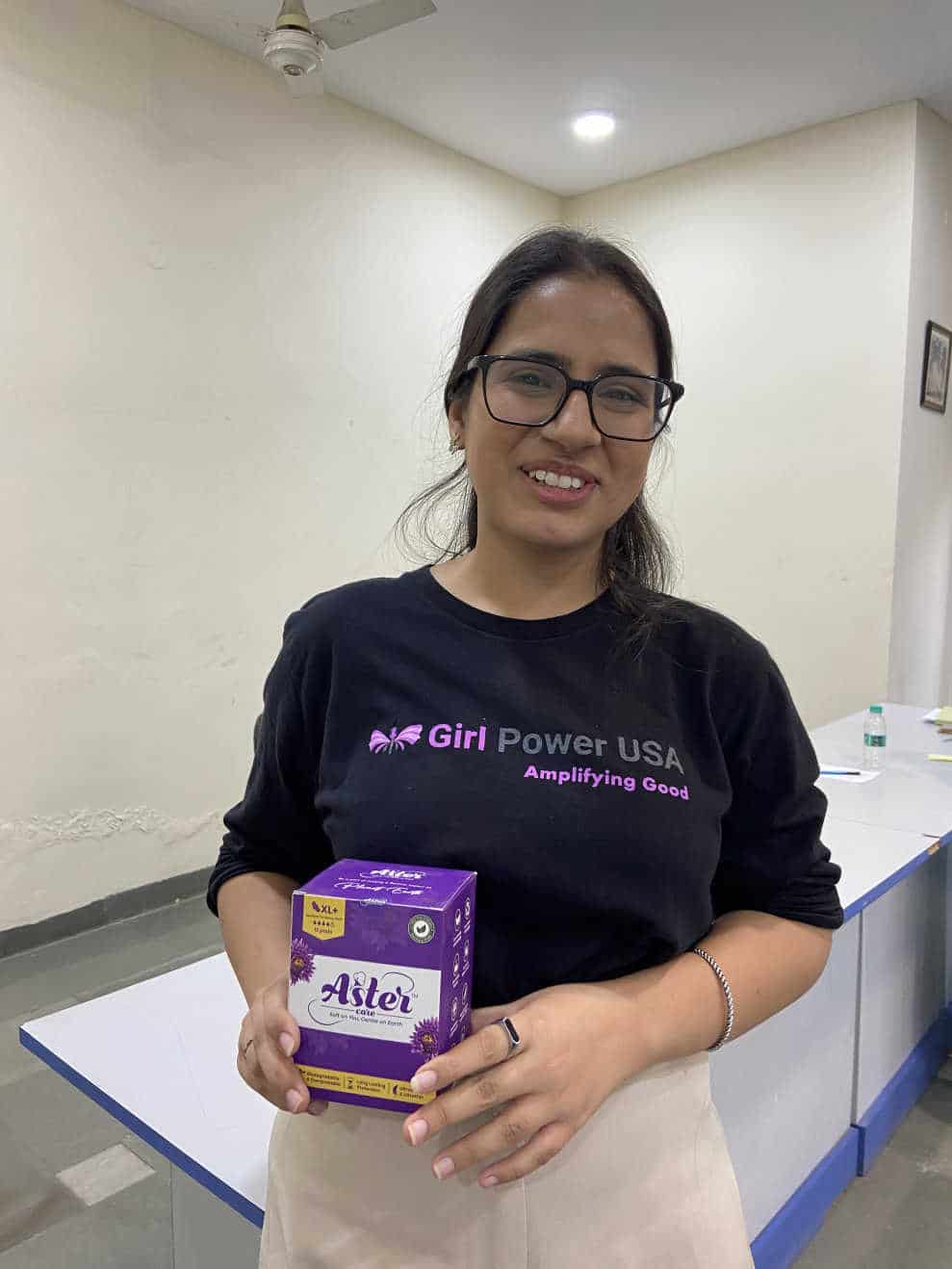
Who Benefits the Most from Feminine Hygiene Product Donations?
Pad donations benefit girls and women from marginalized communities, and low income settings the most. Adolescents, students, daily-wage workers, and those living in such settings, rural or disaster-affected areas barely have access to feminine hygiene products. For them, access to pads would directly affect health, school attendance, work continuity, and self-worth. Having access to a simple pad can mean staying in class, avoiding infection, moving freely with comfort.
Regions & Populations Most Affected by Period Poverty
Sub-Saharan Africa
Across the Sub-Saharan zone, the need for menstrual hygiene is the highest. Most schools in the area lack pads, clean water, and private toilets. Only 12 percent of schools offer menstrual materials, and about one in ten girls misses school when they have their period.
South Asia
In South Asia, poverty, stigma, and weak WASH systems give rise to numerous challenges for menstruating women. These challenges include the inaccessibility of menstrual health products and stereotypical notions regarding the usage of pads. In Bangladesh, three in four women and girls struggle to access menstrual products. The awareness regarding reusable options is also low, as only 27 percent know about reusable pads, and just 13 percent know about menstrual cups.
Middle East and North Africa (MENA)
Many girls in MENA grow up without basic menstrual knowledge. With 20 percent of menstruators lacking essential information, it becomes challenging and often embarrassing to access menstrual hygiene products. Due to this, about 30 percent of girls miss some or all school days during their periods.
Crisis-Affected Regions (Gaza, Lebanon, refugee camps)
Situations turn worse in crisis-affected zones during menstruation. Shortages of pads, safe toilets, and a lack of privacy lead to distress and infections. During the rough times, pads should be made accessible, but the prices rather surge by 98 to 234 percent, making them out of reach for many. Due to these issues, the girls and women in conflict zones often face unsafe and undignified conditions.
High-Income Countries
If you think high-income countries are free from period poverty, then you are absolutely wrong. In the United States alone, one in four teens and one in three adults struggle to afford menstrual products. At the same time, in least-developed countries, only 17 percent of schools have menstrual-friendly facilities.
Worldwide, basic hygiene facilities are still missing. Starting from clean water and toilets to sanitary napkins, girls and women lack access to necessary hygiene arrangements.
Why These Facts Matter for Donors
The aforementioned numbers show donors exactly where the gaps are and why their support needs to be strategic and focused. When most schools in Sub-Saharan Africa lack pads, water, and private toilets, or when girls in South Asia skip school because products are unaffordable, it signals that donations must prioritise regions where the barriers are the highest. The same applies to crisis-affected regions like Gaza, Lebanon, and refugee camps, where shortages are extreme, and prices have skyrocketed. Understanding these patterns helps donors channel resources to the places where girls are most likely to lose education, dignity, and safety during their periods.
These facts also show that products alone won’t solve the problem. The biggest barriers are actually poor sanitation, lack of clean water, limited safe toilets, and low awareness regarding menstruation. Donors who understand this can fund projects that build toilets, improve WASH systems, and run education sessions, instead of focusing on pad distribution alone.
Finally, the data highlights the need for culturally appropriate and sustainable choices. In some regions, single-use pads work best; in others, reusable options only work when training, safety, and comfort are ensured. Donors can also reduce financial barriers by supporting policy changes, tax removal, local production units, and women-led distribution networks. When giving is aligned with real needs, cultural context, and long-term solutions, the impact becomes lasting rather than temporary.
Period Power: Girl Power USA’s Initiative to Reduce Period Poverty
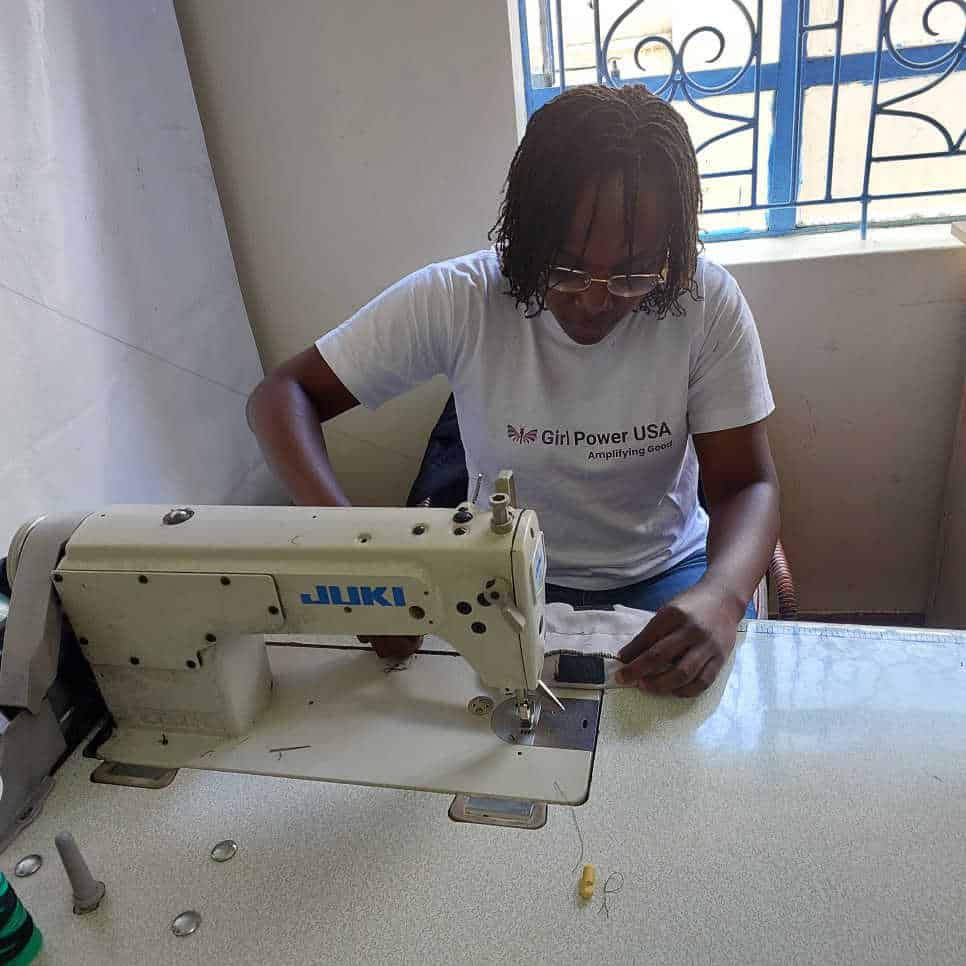
Girl Power USA is dedicated to bringing about long-term change. With the rising demand for assistance, we committed to an initiative that is economical, sustainable, and easy to duplicate in our pad-making training programs. Our program aims to teach girls how to create their own reusable pads with the help of our on-ground volunteers. Our educational approach is further amplified by providing age-appropriate sexual health education to break the stigma surrounding menstruation.
The initiative also creates revenue opportunities for the local community of women. By selling or teaching others how to create reusable pads, these resources are utilized to keep the initiative running. This helps extend the reach of our program and, consequently, impact more lives in the community.
Our long-term goal is to create a completely local system by sourcing cotton cultivated in Nigeria, Uganda, and Kenya to supply manufacturing units that employ locals. These efforts will strengthen societies and provide a realistic, circular solution to reducing period poverty across Africa.
Conclusion:
Donations of sanitary towels are essential in combating period poverty. They keep girls in school, protect their health, and provide dignity when it is most necessary. When communities have consistent access to manage their menstruation safely, the ripple effect is significant. School attendance increases, confidence develops, and the quiet surrounding menstruation gradually break.
However, donations alone are not sufficient. Period poverty is rooted in deeper concerns such as stigma, a lack of information, and limited access to clean water and private restrooms. To tackle it properly, we require a combination of product support, education, and long-term investment in improved facilities and local production. Every contribution, whether it’s a pack of pads or a program that teaches girls about their bodies, serves a purpose.
Learn more about how Girl Power USA is instilling Period Power in women and girls across the region, and extend a generous hand to those who need it most today through our donations page.
FAQs
1. Where can I donate feminine hygiene products near me?
You can donate to local NGOs, women’s shelters, community health centres, orphanages, schools, and youth organisations. Many areas also have period-poverty drives, community pantries, and donation drop-boxes that accept pads and tampons. If you’re unsure, call a nearby women’s shelter or NGO; they almost always need them.
2. Can you donate feminine products?
Yes. Almost every women’s welfare organization actively accepts pads, tampons, panty liners, and menstrual cups, as long as they are new, sealed, and unused. These donations directly support people who cannot afford basic period products.
3. Can you donate unopened boxes of tampons?
Yes. Unopened, undamaged boxes of tampons are safe to donate. Shelters, schools, and community groups prefer sealed packaging to ensure hygiene and safety.
